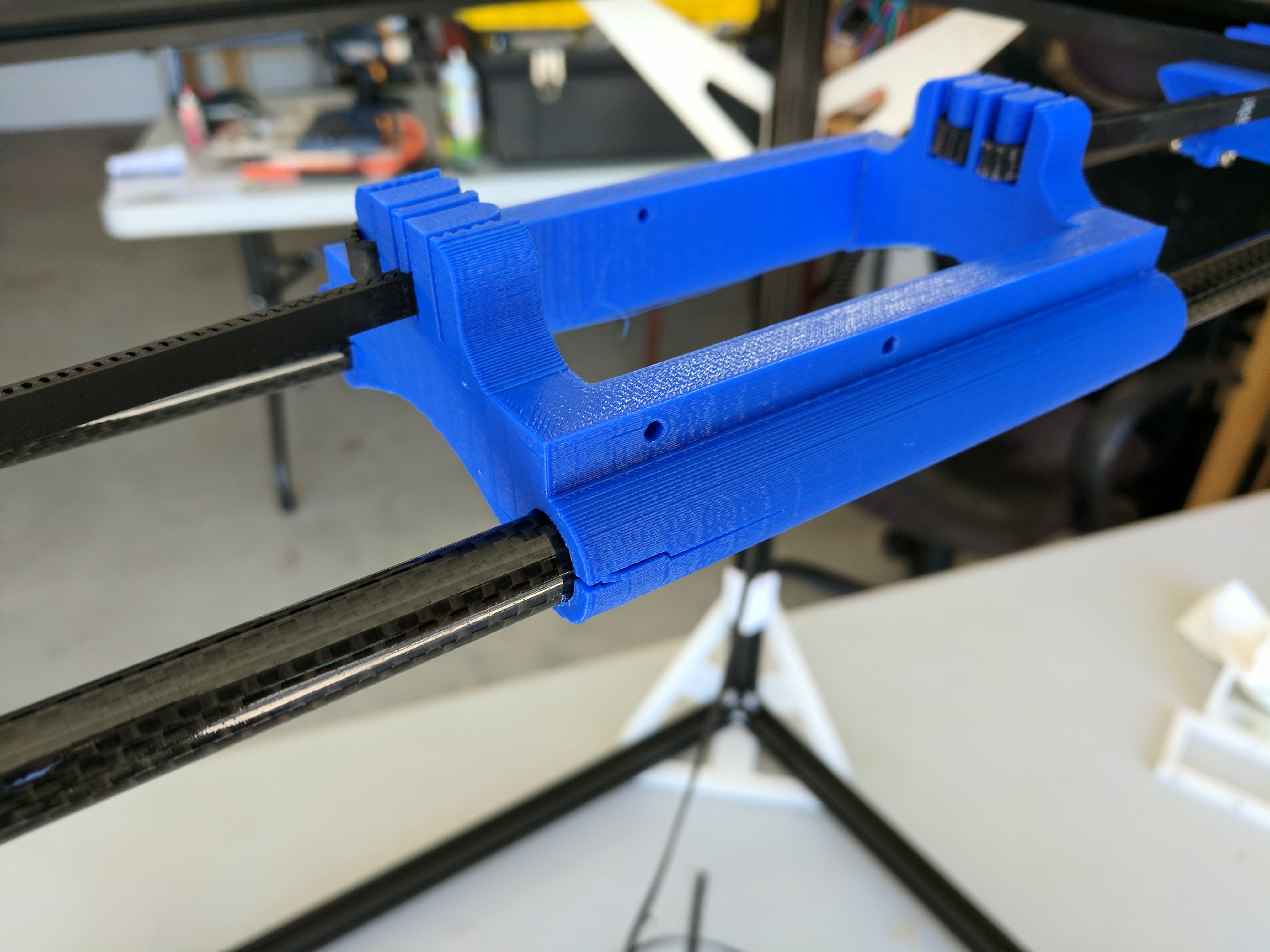
Lets us be clear - I am pushing my printer to its ragged edge. I bought a cheap Chinese clone of the (older) Prusa i3 as a bootstrap printer. As a bootstrap printer, I want it to print parts for my next printer. (Rather than upgrade this decent/dubious clone.)
Been through seven rolls of filament, as I ascended the CAD/FDM learning curve (starting in April). My printer is making some slightly alarming mechanical sounds.
The manufacturer specs claim the printer can run at 150mm/s. Well, it can … somewhat. I printed a lot of parts at 150mm/s - that were somewhat crude, but functional. The higher speed saved time.
As my parts became more complex, I had to drop the print speed from 150 to 100mm/s.
Used up a roll from ZYLtech (bought on a recommendation from this group). The prints were stringy and an bit crude, but functional.
Used up a roll from 3d Solutech - actually, my third(?) roll from them. The same exact prints were in comparison - beautiful - and strong/functional.
Loaded a roll of Hatchbox PLA, and … getting garbage prints. Failed prints. The prints that completed are weak (poor inter-layer adhesion). Dropped the print speed to 60mm/s and … looks much better so far, but I think this print also might be a fail. Tried higher and lower temperatures (at higher speeds).
Yeh. I am new to this. There might be something in the prints that could serve as a clue, and tell me what is going wrong. Or I should simply avoid Hatchbox.
Moisture in the filament perhaps? You try drying it?
If you hear popping and cracking from the filament it’s moisture. I have had mixed results from hatchbox myself. I use inland and makergeeks probably 50 kg this summer with no issies. But I have no desire to run at 150mm/s.
@Ryan_Carlyle Yes and no. The Solutech prints (after several days exposed) became a bit frothy. Put in the oven overnight (with a sock filled with white rice) at 170F. Put the Solutech and sock of rice in a covered Home Depot bucket. When I took the Solutech out of the bucket a couple weeks later, it printed beautifully.
When I first tried to print with this blue Hatchbox PLA, I was getting crap prints. (Might be me … early days … but.) Put the Hatchbox in the oven overnight at 170F. Took it out … and still getting crap prints.
Starting to think Hatchbox is the problem.
Also, when my printer loses Z (every few days), and the nozzle is too close to the bed, with Hatchbox the extruder gear grinds through the filament, and the gear teeth become clogged.
If you have a better printer, this would not happen. If you had a better extruder, this would not happen. If you have a cheap Chinese clone of the Prusa i3 (rather a lot of those) … you might beware.
@James_Whittington Oddly, I have never seen or heard the steam/popping/cracking suggested by the online videos, even when I was getting popcorn prints. Not sure what to make of that.
And I do want to push speed. 
With PLA it is obvious, I have never had any issue with PLA and moisture with out having it pop and crack. PETG on the other hand will get brittle after printing with out popping. Water affects it differently.
@James_Whittington Well … I dunno.
I live in coastal southern California. That means warm and moderately dry days, and cool humid nights (the effect of the nearby ocean).
My prints with the 3D Solutech filament started to get a bit rice-crispy after several days (more than a week) exposed to open air. Never saw the pop and crack suggested by online videos.
Popped the filament into an oven overnight at 170F … and when next printed, it worked beautifully.
So … ??
Oh definitely moisture. Popping and steam is a secondary result of printing damp material. The important thing is the part that is left behind. You might be going too fast for the steam to be apparent.
As a point for information, my print with the Hatchbox PLA at 60mm/s completed. The blue is pretty. The inter-layer adhesion is a bit weak. If you are printing non-functional parts at slower speeds, might be a good product.
If you need strength, this might not be the best choice.