Originally shared by null
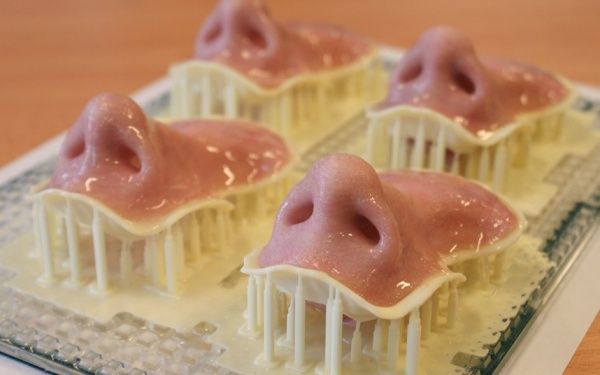
How to Print a New Nose
3D printing is a way of manufacturing physical objects directly from 3D computer models. 3D printers work in additive fashion, building an object layer upon layer, typically from resin or photopolymer, which may be pigmented for production of coloured objects. Even intricate forms can be produced quickly by this technology, making it ideal for one-off or short-run production.
3D printing is widely employed in product design, for rapid prototyping of such things as hand-held devices, car parts, jewellery or footwear designs, architectural or engineering components. In the future it looks likely to extend into the manufacture of complex multi-part objects.
Amongst the most useful applications of this rapidly developing technology are in medicine, in the production of individually shaped items such as dental crowns and bridges, synthetic bones and joints, or artificial limbs and other prostheses.
Fripp Design and Research, who have extensive experience in 3D printing for industrial design, were keen to try and adapt the technology for prosthetic production. Key to the research project has been the development of printable materials that are biologically inert, that can be safely worn in contact with human tissue and comply with relevant safety standards. After testing several materials, the research team found a starch powder that fit the bill and which can be combined with water-based resin and inks to produce a suitable printing medium.
Read more about how 3D printed noses are made:
http://www.emc-square.org/emc2/?p=5773
Check out 10 things from 3D printing we’ve seen in 2013: 2013: Coolest 3D Printed Items of The Year
#Science #3Dprinting #medical #research #prostheses #nose #ScienceEveryday